LGBTIQAP+ Workplace Wellbeing: Beyond Inclusion
For LGBTIQAP+ employees, wellbeing at work is shaped by lived experience, minority stress, and the need for genuine safety. Discover how Shemewé Collective supports belonging through trauma-informed, relational EAP programs.
When we talk about workplace wellbeing, it is easy to assume one size fits all. But for many people in the LGBTIQAP+ community, the pathway to feeling safe, affirmed, and genuinely included at work is shaped by a long history of trauma, exclusion, and resilience. This is lived experience, and it shows up in workplaces every day.
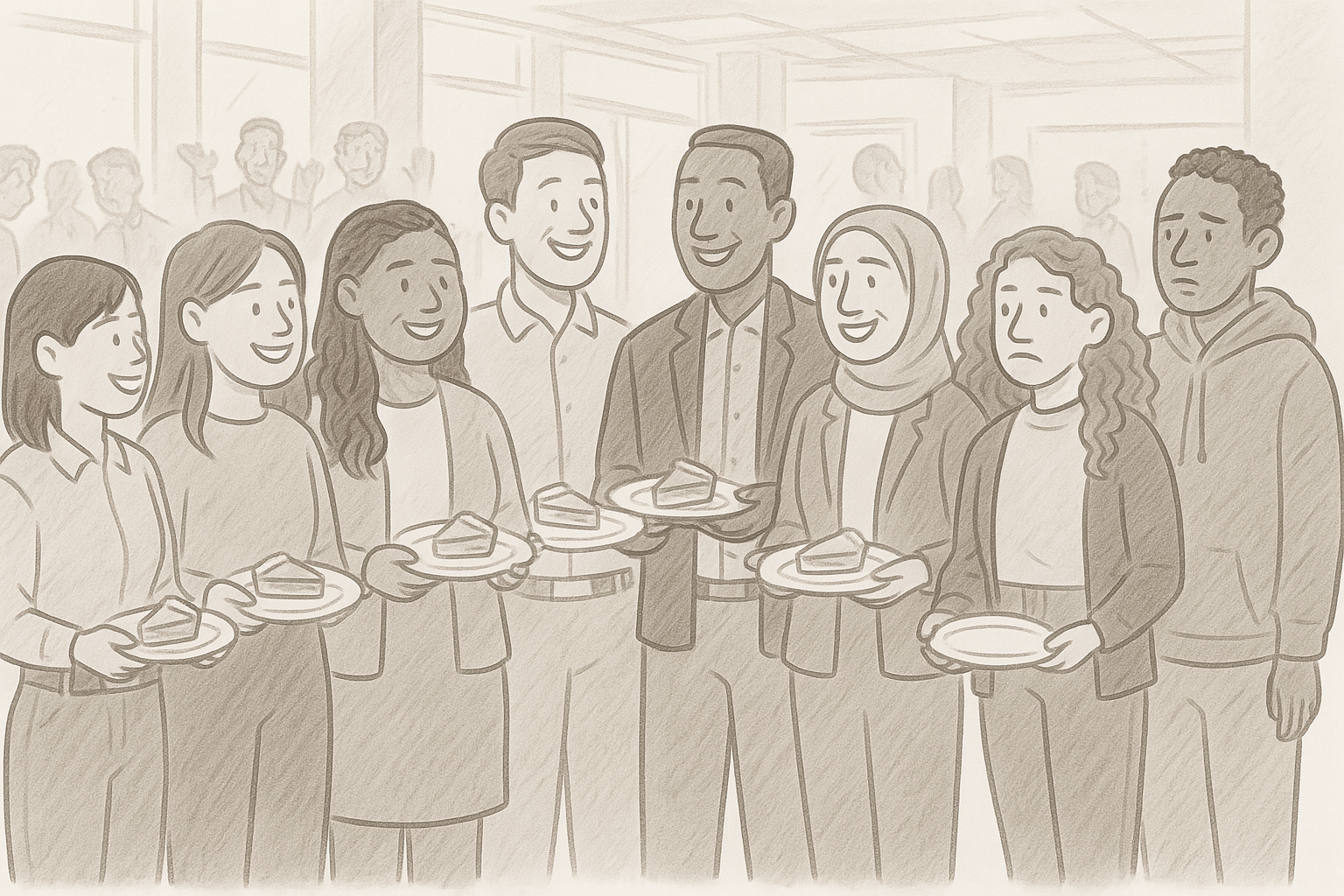
Belonging at work is not created by policies alone. It is shaped by daily interactions, leadership choices, and whether people feel safe to show up as themselves without fear of judgment or harm.
Wellbeing and the Legacy of Minority Stress
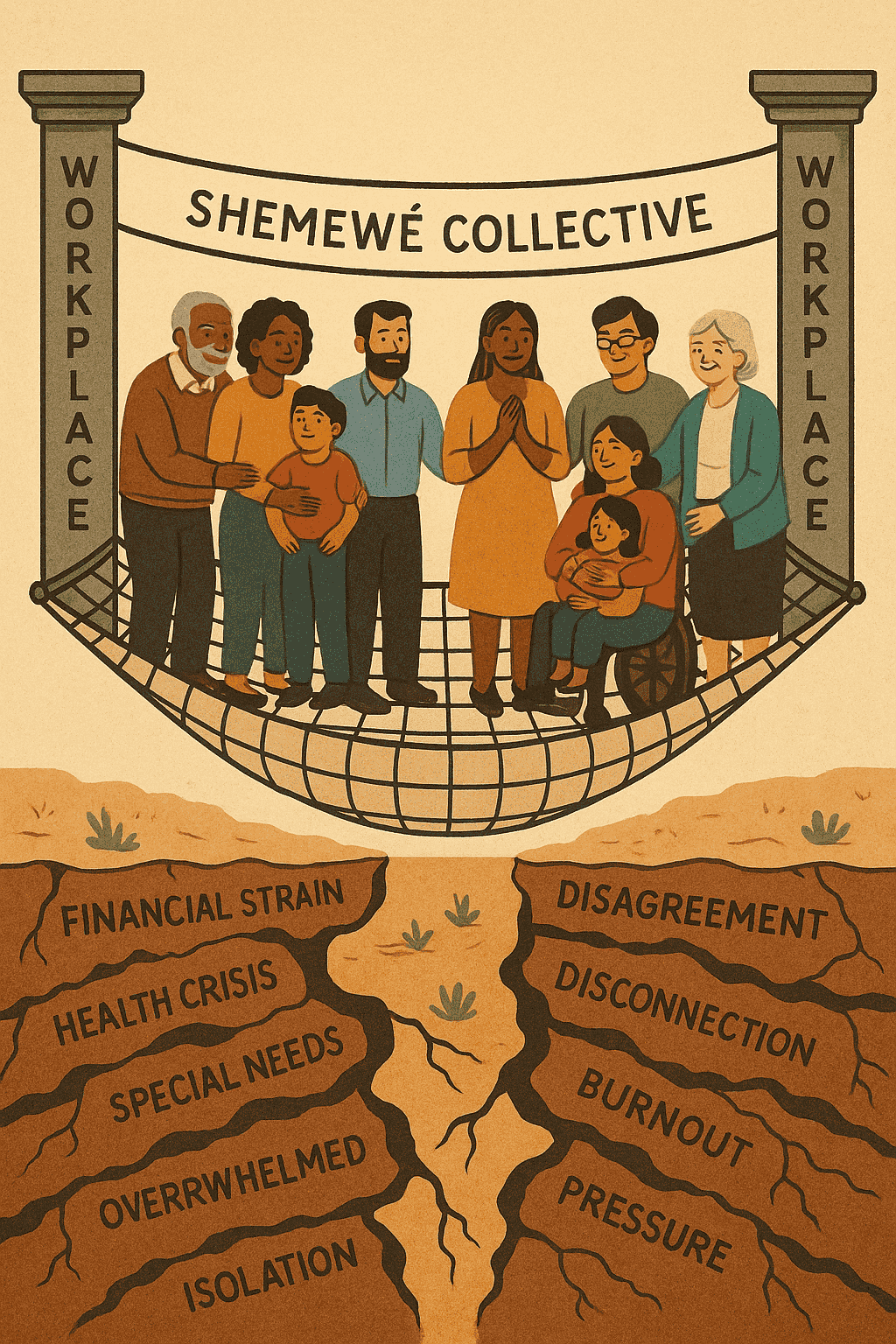
In the 1980s, sociologist Ilan H. Meyer introduced the concept of minority stress to describe how stigma, prejudice, and discrimination create additional pressures for marginalised communities. For LGBTIQAP+ people, these pressures significantly impact mental, emotional, and physical wellbeing.
Minority stress helps explain why LGBTIQAP+ people experience higher rates of anxiety, depression, and psychological distress, and why supportive environments make such a profound difference.
Many people in the LGBTIQAP+ community also carry complex trauma. For some, safety, acceptance, and secure attachment were never guaranteed. These experiences do not disappear when someone enters the workplace; they shape how people relate, communicate, and respond to stress.
Why Workplaces Matter So Much
Research in Australia shows that LGBTIQAP+ people are more likely to experience discrimination in healthcare and support settings, with flow-on effects for work, wellbeing, and engagement. The Private Lives 3 survey found that more than half of LGBTIQAP+ respondents experienced high or very high psychological distress, compared with a small proportion of the general population.
Workplaces can either compound this stress or help to reduce it. When employees feel psychologically and culturally safe, the impact is protective supporting retention, collaboration, and long-term wellbeing.
Inclusion Is Not One Story
There is no single LGBTIQAP+ experience. For some, inclusion looks like marriage, family recognition, and fitting into mainstream expectations. For others, it is about freedom to live outside traditional norms, to be visible, expressive, and unapologetic.
Workplaces often find it easier to accept certain forms of difference while rejecting others. True inclusion requires curiosity, humility, and a willingness to listen rather than assume.
Workplace Responsibility and Relational Care
Supporting LGBTIQAP+ staff is not about having the perfect checklist. It is about asking thoughtful questions, offering choice, and adapting support to individual needs. Even small actions confidential support options, culturally safe spaces, and community-centred initiatives can significantly reduce minority stress.
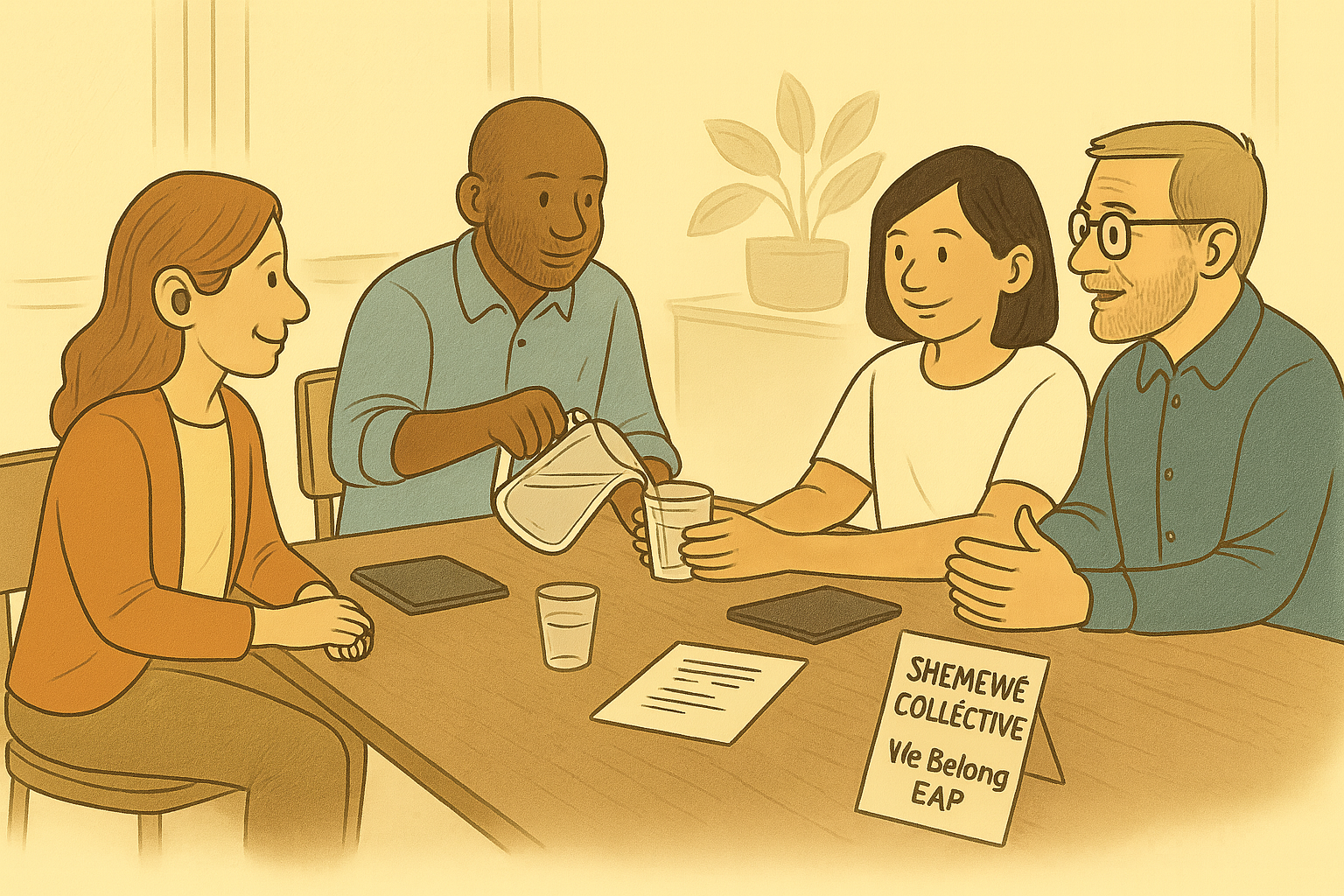
At Shemewé Collective, our We Belong EAP and We Belong Private programs were created in response to this reality. Our team brings trauma-informed, relational, and culturally responsive care into workplace wellbeing.
Belonging as a Foundation for Wellbeing
Belonging at work is not a luxury for LGBTIQAP+ staff. It is foundational to wellbeing, safety, and sustainable participation. When people feel respected and affirmed, they are more likely to remain engaged, contribute fully, and build strong workplace relationships.
If you are an HR or wellbeing leader, inclusion is more than a policy it is a daily practice. Connect with Shemewé Collective via our contact page to explore how our workplace wellbeing programs can support LGBTIQAP+ staff and strengthen organisational culture.