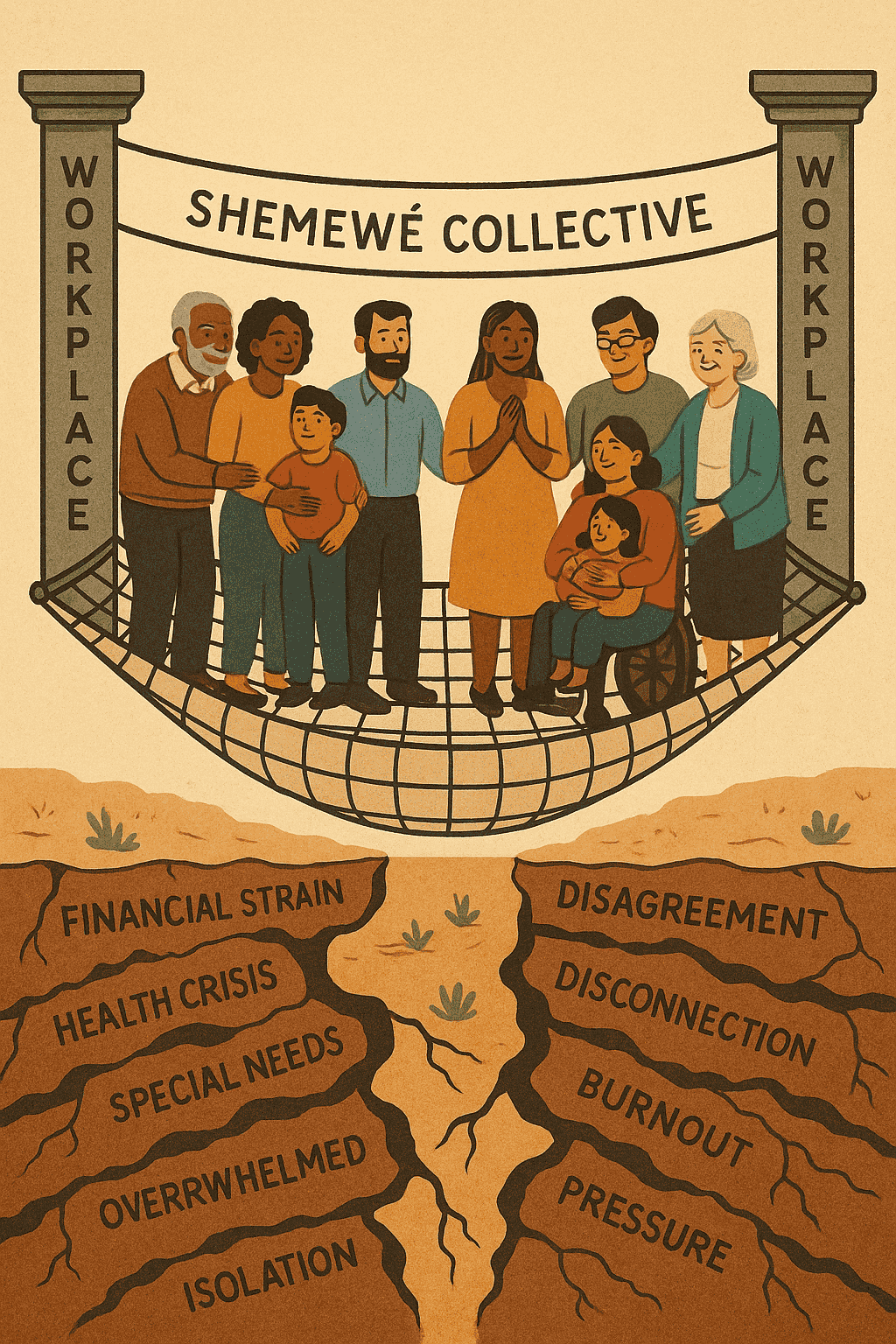
Family Dynamics in the Workplace: Building Cultures of Belonging
Workplaces are communities shaped by the same dynamics we experience at home. Discover how Shemewé Collective helps organisations build cultures of belonging through relational wellbeing programs that support parents, partners, and teams.
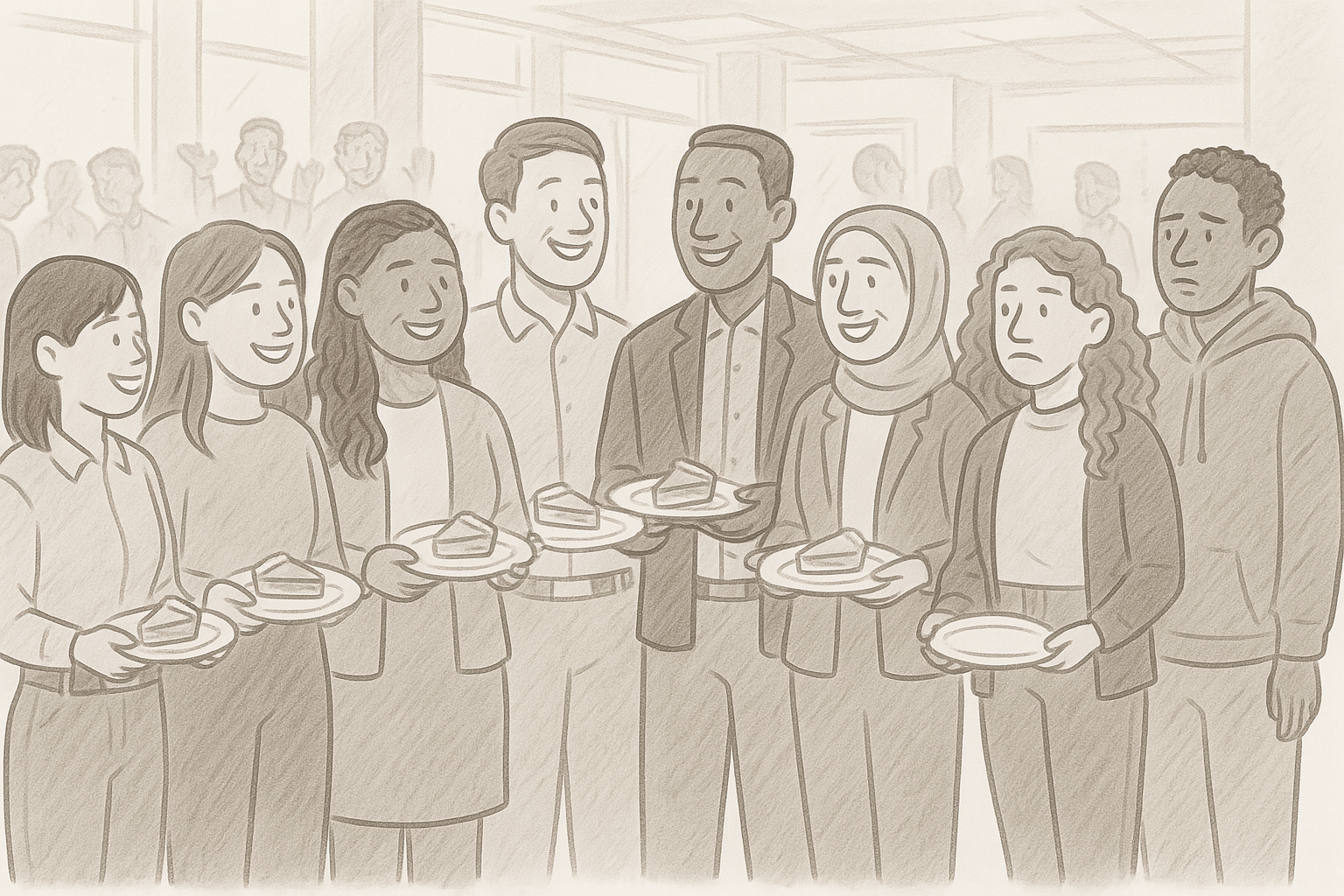
In many workplaces, people are still expected to leave parts of themselves at the door. If you are a parent or partner, you may be told directly or indirectly, to show up only in your professional identity. If you live with a disability or come from a different cultural background, you may feel pressure to fit into a so-called neutral role that is not neutral at all. This unspoken expectation can be exhausting.
For some, separating work from the rest of life feels natural. For others, it feels alienating. We are human first. Everything else follows.
When we deny or interrupt the natural reality of carrying many roles and identities, we create conflict inside people and within teams. It undermines their ability to bring their full self to work. This can create unsafe spaces, block creativity, reduce engagement, and harm productivity.
Western workplace culture often rewards certain traits over others. Quick decision-making is valued, but when decisions are made without consultation or context, the consequences can be costly and long-lasting.
Most of us move between roles every day, adjusting to the space we are in. Boundaries blur. Personal challenges spill into work. Work stress follows us home. In hybrid or high-pressure environments, this happens even more easily.
Workplaces, like families, are communities. The real question is: what kind of community are you building?
Are your leaders respectful, fair, and inclusive? Or do some teams and roles receive more support and recognition than others? Are workloads and expectations balanced across age, gender, and cultural identity? Are people working in a culture that values relationships over competition?
Leadership sets the tone, but every employee sustains the culture. The family, community, and cultural dynamics we grow up with do not vanish at the office door. They show up in how we relate, lead, and respond to pressure.
When Workplaces Mirror Families: Who Gets Fed and Who Goes Hungry?
Picture a small organisation of about 100 staff. It has programs with stable funding and newer initiatives still finding their place. Among them is a prevention-focused program that reduces harm before it begins. It is not the newest program, but it is often overlooked for funding in favour of something more marketable.
As the organisation grows, new programs arrive but funding stays the same. Like a family with the same amount of food and more mouths to feed, someone goes hungry. Often it is the smallest program. Resources are redirected to something seen as having higher value. Eventually, the program is defunded not because it failed, but because it was replaced by something else.
The manager of that program is not consulted. She learns about the closure only when it is too late. Over five years she built community partnerships, grew waiting lists, and raised the organisation’s profile. Yet she is left to close the program quietly, without thanks or recognition.
When decisions lack transparency or consultation, the damage spreads beyond one program. Trust erodes. Staff leave. Experience, cohesion, and organisational memory go with them.
From the outside, everything may look fine. Inside, the organisation can become hollow; functioning but disconnected, driven more by economics than care.
Why Relational Dynamics Matter at Work
This is not about criticising leaders. Leading people is one of the most relationally complex roles there is. Family dynamics live in our workplaces too, shaping how we communicate, how we lead, and how we respond to stress.
If we want healthy workplaces, we need to support leaders and teams to understand and shift these patterns, both at home and at work.
Relational Support for Real Workplace Dynamics
Conscious Parenting and Relationship Rescue are two confidential, workplace-based programs offered by Shemewé Collective. These groups support the real dynamics that shape how people show up at work; communication, stress regulation, power dynamics, trust, and connection.
By investing in relational wellbeing, organisations create conditions for stronger leadership, healthier teams, and workplaces where people feel safe, valued, and able to bring their whole selves.
Build a Culture Where Everyone Belongs
The wellbeing of employees is inseparable from the wellbeing of the teams and organisations they belong to. When workplaces honour the full humanity of their people, everyone benefits; retention improves, communication strengthens, and cultures become more resilient.
Connect with Shemewé Collective to explore how our Employee Assistance Program (EAP), Conscious Parenting, and Relationship Rescue groups can strengthen workplace culture and wellbeing. Visit our contact page to begin the conversation.