Emotional Intelligence and the Art of Leading Others
Explore how emotional intelligence shapes better leadership and how self-awareness helps leaders develop others and strengthen workplace wellbeing.

How do we want to be led?
It’s worth sitting with that question for a moment. Think of the best leader you’ve ever had, or the one you wished you’d had. What did they bring into the room? How did they make you feel about your work, your growth, your place in the team? What qualities, what manner, what kind of engagement made the difference?
Did you answer that question instinctively? Or did it take time because you haven’t yet experienced a leader that inspires you? Why is it then for so many of us, when we step into leadership ourselves, we revert to what we’ve seen modelled, even when it’s not what we would have chosen for ourselves?
This is where emotional intelligence begins. Not as a concept, but as a practice.
Leadership Is Not a Title
When we think of leaders, we often think of well-known figures, world leaders, Nobel laureates, people whose names we recognise. But some of the most formative leaders in our lives were far closer to home; our parents and teachers. The Adaptive Leadership model reminds us, leadership is not a title, a position, or agenda. It is a behaviour, an activity. Even a child stepping up to say “I need you to look at me, not at your phone” is exercising leadership, naming a need and calling for presence.
What these leaders share, at their best, is awareness, of themselves, of others, and of the power they carry. Because power comes with the role, whether we ask for it or not. Titles carry weight. Gender carries privilege. Whiteness shapes the room before a word is spoken. Holding that awareness with honesty is not optional for leaders who want to lead well.
More Than Just Feelings
Emotional intelligence starts with awareness, slowing down enough to notice, what am I sensing right now? What emotion is present? What thought keeps looping? These three, sensation, feeling, and thought, are often connected. And running beneath them is something even more revealing: a story that links them together.
We each carry a story about who we are, how we lead, what we deserve, what others think of us. Most of the time we don’t examine it. We just live from it.
The Library We Each Carry
I often share this analogy with the people I work with; every human being is like a walking library. Every thought, every emotion, every sensory impression we’ve ever experienced from birth is recorded in our cells. The memories are there even when we can’t consciously access them.
Our brain filters what we need in any given moment. But when we’re triggered, when we have a visceral, immediate reaction to something, it’s as though we’ve walked into that library and reached instinctively for a very familiar book. One we’ve read so many times it feels like truth. One so well-worn in our nervous system that it has become a kind of superhighway.
The work of emotional intelligence is not about demolishing the library. It’s about opening a new room. One where, instead of unconsciously reaching for the same story, we pause and ask: does this book still serve me? Does it open new possibilities, or does it keep me locked inside one version of myself?
That pause, that moment of choice, is where leadership changes.
Self-Awareness and Self-Responsibility
Emotional intelligence requires both self-awareness and self-responsibility. Not just paying attention to what challenges us but celebrating our wins too. Acknowledging what motivates us, what triggers us, and trusting the inner intelligence we carry, call it gut feeling, instinct, intuition or spirit, that can guide us when we learn to listen.
I often say to the people I work with: I have a set of tools to support your journey, but it is your right to take credit for the gains and take responsibility for the pains. That is not burden, it is agency. And agency is what emotionally intelligent leadership is built on.
What Leading Others Actually Looks Like
Leadership that develops others is not about having all the answers. It requires humility, a willingness to share power and hold space for those around you. It also requires honesty: when we make a mistake, to own it without dismissing its impact on others.
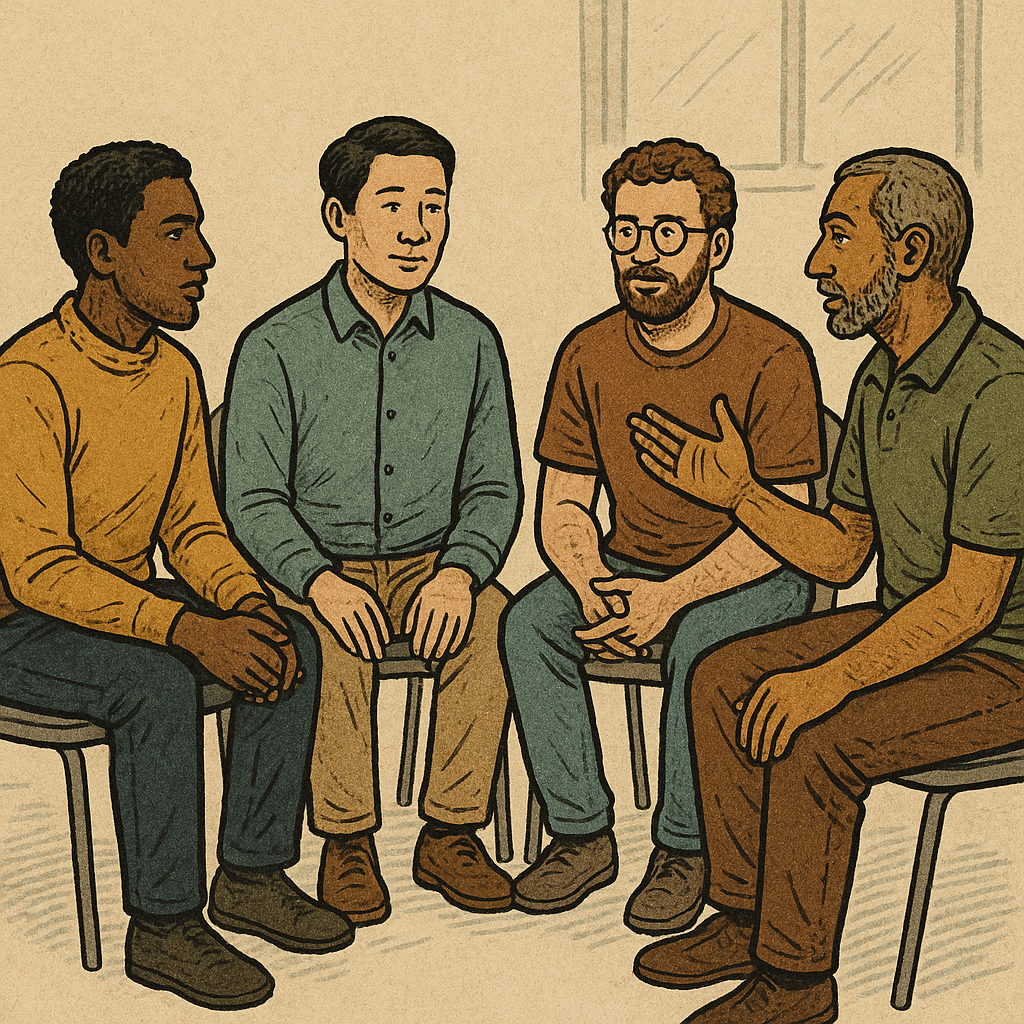
One practice I use in both one-to-one and group settings is the Co-Resolve and Deep Democracy check-in. At the beginning of a meeting members are invited to show up as people first, before their title, before their role, and the host leads the way. No crosstalk, no commentary. Just presence and an honest answer to a shared question. This builds something no policy document can manufacture: the felt sense that we are in this together.
When leaders notice what’s moving inside themselves, they become far more attuned to what’s moving in the room. They respond to the person in front of them rather than the story they’ve already written about that person. This is emotional intelligence in practice.
What I know from this work is that the leaders who have the most positive impact are rarely the ones with the most authority. They are the ones who have done the most honest work on themselves.
If your organisation is exploring emotional intelligence and leadership development, we welcome a conversation via our contact page.